

Most business owners only look at insurance when something goes wrong, a claim gets denied, a contract deadline is looming, or renewal pricing jumps. A business insurance review is the proactive version of that moment: a structured check of what you are insured for, what you are not, and what has changed in your operations that could create uncovered risk.
If you operate in Georgia, those gaps can show up fast, especially with workers’ compensation classifications, subcontractor exposure, commercial auto liability, and property risks that do not always match a generic policy template.
What a Georgia business insurance review actually covers
A useful review is not just “checking the premium.” It is a risk and contract reality check that connects your operations to what your policies will (and will not) pay for.
In a typical review, you look at items like:
- Your current operations (what you really do today, not what you did two years ago when the application was completed)
- Coverage structure (which policies you have, how they interact, where gaps can form)
- Limits and deductibles (whether they match your contracts, revenue, payroll, and asset values)
- Key exclusions and endorsements (what is carved out, what must be added back)
- Certificates of insurance workflows (how you prove coverage to clients, landlords, GCs, and vendors)
- Claims and near-misses (what they reveal about your biggest frequency and severity drivers)
For many companies, the review also surfaces non-insurance issues that drive insurance outcomes, such as documentation practices, subcontractor controls, hiring, training, and payroll classification accuracy.
When it is smart to request a review (even if your renewal is months away)
Insurance problems usually start with a business change. If any of the situations below are true, it is worth scheduling a review now rather than waiting for renewal.
- You hired, downsized, or changed job duties significantly
- You added vehicles, started deliveries, or expanded driving territory
- You signed new client contracts with insurance requirements
- You moved locations, added a warehouse, or bought major equipment
- You changed your use of subcontractors or 1099 labor
- You had a claim, even a “small” one
- Your premium increased and you did not get a clear explanation
- You have not reviewed your policies in the last 12 to 18 months
If you are growing quickly, a mid-year check can be the difference between a smooth audit and an unpleasant surprise.
Georgia-specific friction points that often create surprises
Georgia is business-friendly, but common coverage and compliance pitfalls still show up across industries.
Workers’ compensation details matter (especially classifications and subcontractors)
Workers’ compensation is one of the most common places where “we thought we were fine” turns into an expensive correction later. Classification accuracy, payroll accuracy, and how uninsured subcontractors are handled can all impact premiums and claims outcomes.
For official guidance and state-level resources, the Georgia State Board of Workers’ Compensation is a helpful reference point for employers.
Commercial auto losses can become severe quickly
Even companies that do not consider themselves “transportation businesses” can have meaningful auto exposure through:
- Sales reps on the road
- Jobsite driving and trailer use
- Employee-owned vehicles used for business errands
- Hired and non-owned auto situations
A review is a good time to confirm who is driving, what is being driven, where vehicles are garaged, and whether liability limits align with worst-case scenarios.
Property values and business interruption are often under-reviewed
Inflation and supply chain swings have made it easier to drift out of sync with real replacement costs. Many businesses also discover too late that business interruption protection, waiting periods, and extra expense coverage do not match their actual recovery timeline.
The U.S. Small Business Administration provides a useful overview of common coverages (including property and liability) on its business insurance guide.

What to prepare before you contact us (so the review is faster and more accurate)
You do not need a perfect file room to get value from a review, but having a few basics ready helps your advisor spot gaps quickly.
| What to gather | Examples | Why it matters |
|---|---|---|
| Current policies and declarations | GL, property, workers’ comp, auto, umbrella, professional, cyber (if applicable) | Confirms limits, forms, endorsements, and carriers |
| Loss runs or claims history | Typically the last 3 to 5 years, if available | Shows patterns and helps target risk controls |
| Payroll and role breakdown | Payroll by job type, overtime handling, subcontractor use | Drives workers’ comp, EPL considerations, and audits |
| Vehicle list | VINs, use, radius, drivers (if applicable) | Commercial auto pricing and coverage accuracy |
| Certificates and contract requirements | Insurance clauses from customers, landlords, GCs | Prevents “contract says X, policy provides Y” problems |
| Basic financial and asset info | Revenue range, equipment values, locations | Helps align property, BI, and liability limits |
If you do not have all of this, that is fine. The point is to start the conversation and fill gaps as you go.
What you should expect to get out of a real review
A good review ends with decisions and a plan, not just observations. Depending on the complexity of your operation, outcomes often include:
- Clear confirmation of what is covered, and what is not
- Recommendations to tighten alignment between contracts and insurance
- Coverage adjustments (limits, deductibles, endorsements) tied to actual risk
- A practical risk-priority list based on your biggest loss drivers
- Notes on compliance-sensitive areas (especially where HR, payroll, and insurance overlap)
Here is a simple way to think about it:
| Outcome | What it means for you |
|---|---|
| Fewer surprise exclusions | You understand where claims could be denied before it happens |
| Cleaner renewals | Underwriting questions are answered earlier, with fewer last-minute scrambles |
| Better cost control | You stop paying for misaligned coverage and reduce avoidable claim frequency |
| Stronger contract readiness | You can meet insurance requirements with less back-and-forth |
Why business owners choose a boutique review instead of a quick quote
A quote can be useful, but it is not the same as a review.
A review is where an advisor can connect the dots across:
- Insurance structure (what you buy)
- Risk reality (what can actually happen)
- Payroll and HR factors (how classification, hiring, and documentation impact claims and premiums)
Zorn Insight positions this as a tailored, Georgia-based approach to insurance and risk management, with the ability to support related needs like payroll processing, HR compliance, and employee benefits administration, when those areas affect your risk profile.
If you want additional context on core commercial coverages and how they fit Georgia businesses, see Zorn Insight’s guide on business insurance in Vidalia, GA. Even if you are outside Vidalia, the coverage framework and common mistakes are broadly relevant.
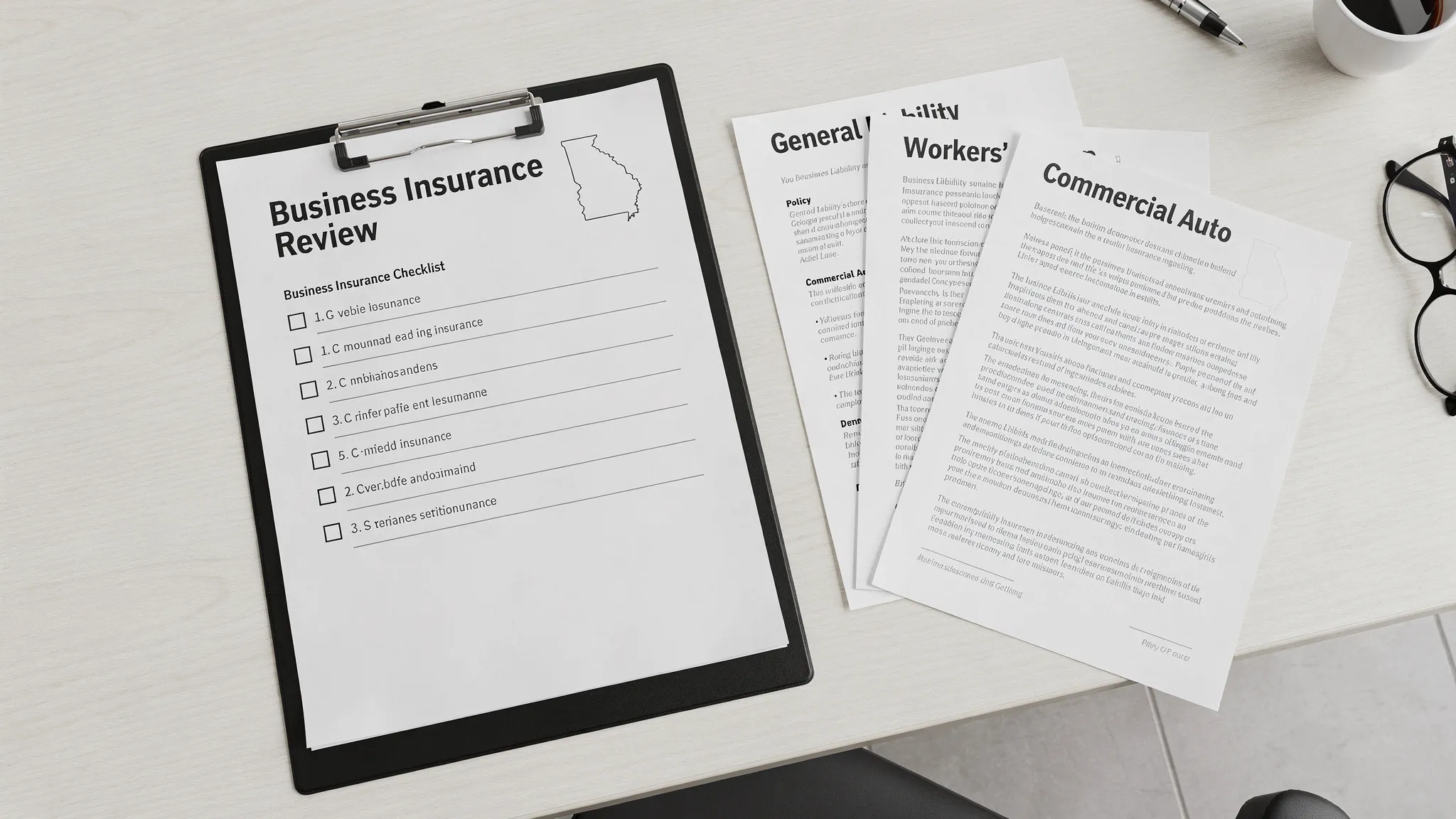
Contact us to schedule a Georgia business insurance review
If you are not sure whether your current coverage matches your growth, contracts, payroll realities, or risk tolerance, the next step is a conversation.
You can contact us through the Zorn Insight website to request a Georgia business insurance review and outline what you want checked first (renewal pricing, contract requirements, workers’ comp concerns, commercial auto exposure, property values, or all of the above): Contact Zorn Insight.
The goal is simple: help you uncover hidden gaps, reduce avoidable surprises, and protect what you are building.