Before a hard freeze, a Georgia business should find out what its commercial property policy says about frozen pipes and water damage, especially any conditions about keeping the heat on or draining water lines. Then check the building itself: exposed pipes, heat in empty spaces, shutoff valves and who will check on the property.
Coverage depends on the policy and insurer. This article is general information, not a coverage determination.
South Georgia winters are mild most of the time, which is exactly why a cold snap can catch a business off guard. Georgia’s insurance commissioner has noted that while the state does not get much snow, it often has below-freezing temperatures this time of year. A single cold snap can be enough to freeze a pipe in an attic, a crawl space or an outside wall.
Why are burst pipes a winter risk for South Georgia businesses?
The Insurance Institute for Business & Home Safety (IBHS) calls burst pipes the main cause of property damage from winter weather. Its engineering guidance explains that a pipe usually does not break where the ice forms. Once ice blocks a pipe, continued freezing pushes up water pressure between the blockage and a closed faucet or valve, and the pipe often bursts where there is little or no ice.
IBHS also points to a regional pattern. In southern climates, water pipes in commercial buildings are more likely to run through unprotected areas outside the building insulation, and owners tend to be less aware of freezing problems that may come only once or twice a season. Vacant buildings face greater exposure because inside temperatures swing more and no one is there to notice a leak.
What does a commercial property policy usually say about frozen pipes?
Policies differ, so the policy itself is the document to read. The District of Columbia’s insurance regulator explains that most homeowner and commercial property policies generally cover damage from a frozen pipe that bursts when the policy covers a sudden and accidental discharge from a plumbing system. It also gives an important caveat: a policy may not respond if it appears the owner neglected to take proper steps to protect the property. Policies usually require that heat be maintained, and some require a certain temperature even when the property is vacant or unoccupied.
Questions to bring to your agent before winter:
- How does my policy treat water damage from a frozen or burst pipe?
- Does the policy have conditions about maintaining heat or a minimum temperature, or about shutting off and draining water lines when a building is unheated?
- Is there a vacancy or unoccupancy condition, and how does the policy define those terms?
- What deductible applies to a water damage claim?
- If a covered water loss forces us to close, how would business income coverage apply, if we have it?
- How soon does the policy require us to report a loss, and to whom?
- If we lease our space, what does the lease say about who insures the building, the plumbing and our contents?
Georgia’s insurance office gives similar advice for any claim: know what your policy covers, what it excludes and what your deductibles are before you need it. Our commercial property insurance page explains the coverages that usually make up a property program.
What should you check in the building before a hard freeze?
Most of this work can be done on a mild afternoon in November. Drawing on IBHS’s commercial guidance and Georgia’s cold-weather tips, walk the building and look for:
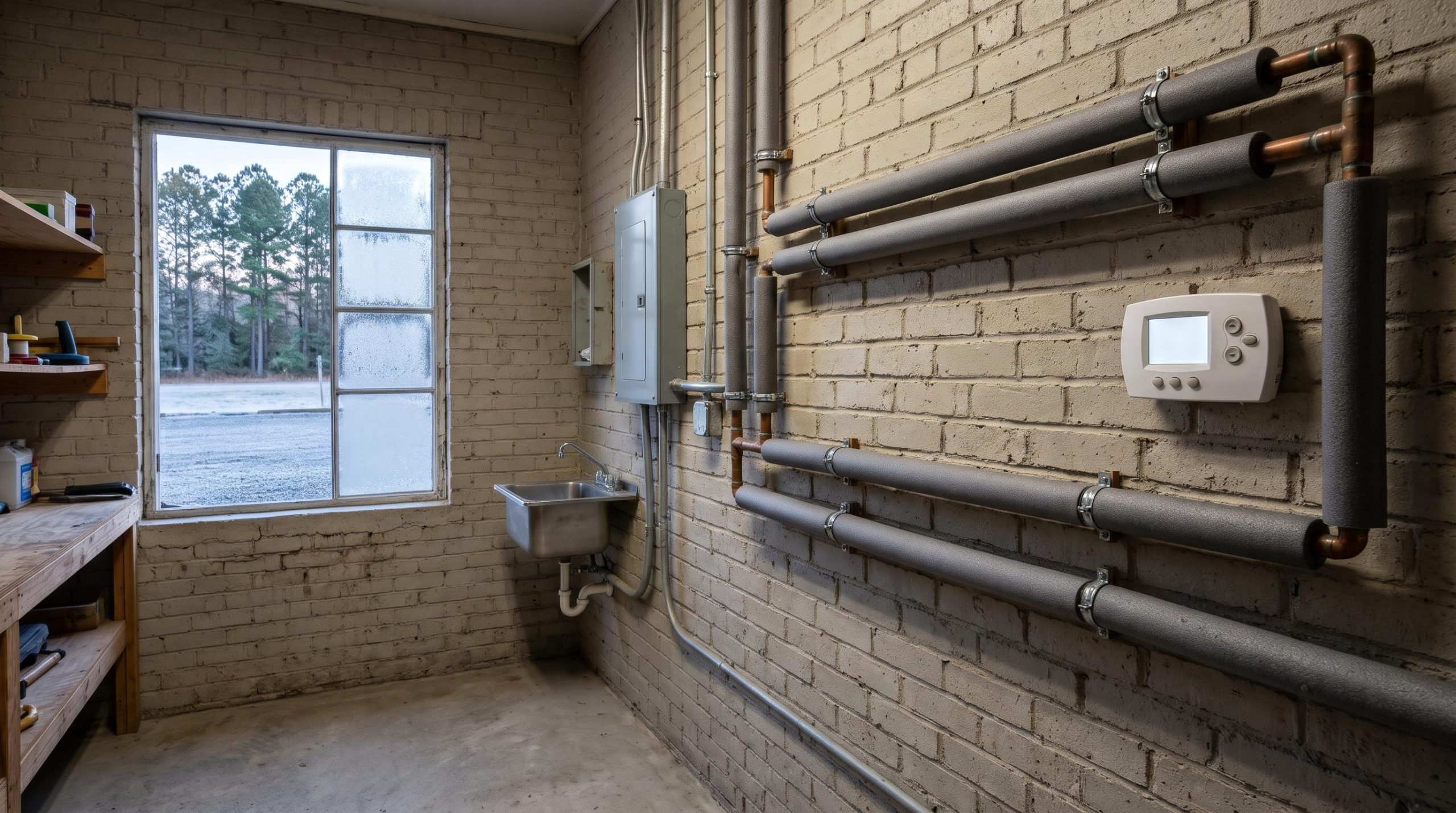
- Exposed pipes: pipes in attics, crawl spaces, unheated storage rooms and along exterior walls. Insulate the vulnerable ones with pipe sleeves or other insulation.
- Air leaks: cracks, holes and gaps around windows, doors and wall penetrations that let cold air reach pipes. Seal them with caulk or insulation.
- The heating system: make sure it works before the first cold night, including in back rooms and spaces that are not used every day.
- Outside faucets and lines: shut off and drain pipes that lead to the exterior at the start of winter, and remove hoses.
- Shutoff valves: know where the main water shutoff is, make sure it turns, and show more than one person how to use it.
- Monitoring: a temperature alert system can notify someone if the building gets too cold, and an automatic excess flow valve on the main domestic water line can help detect a break early.
If your building has a fire sprinkler system, leave it to a fire protection professional. IBHS notes that domestic water lines are separate from fire protection lines, so shutting off and draining the domestic water should not mean shutting down the sprinklers.
What should you do when a freeze is in the forecast or the building will be closed?
Holiday closures around Thanksgiving and Christmas fall in the part of the year when freezes are possible. When a freeze warning is posted:
- Keep the heat on. Do not turn it off for a long weekend or a holiday closure. For vacant commercial buildings, IBHS recommends a thermostat setting of at least 55°F, with monitoring so the inside temperature does not drop below 40°F.
- Let faucets drip. Georgia’s insurance commissioner advises turning sinks to a slow drip before bed when a freeze warning is in effect, and IBHS gives similar advice for small commercial properties during extreme cold.
- Arrange a check. If the business will be closed for several days, have someone look in on the property.
- Shut off and drain for long closures. For a building that will sit empty for an extended time, IBHS recommends shutting off the domestic water and draining the lines, leaving fire protection lines alone.
Keep a short record of what you did and when, such as the thermostat setting, who checked the building and any lines you drained. If a loss happens, that record helps show the steps you took.
What if a pipe bursts anyway?
Act quickly to limit the damage:
- Turn off the water at the main shutoff.
- Call a plumber or contractor for repairs and cleanup.
- Take photos and video of the damage before making temporary repairs.
- Keep the broken section of pipe, since Georgia’s insurance commissioner advises preserving it for the insurance company.
- Report the loss to your agent or insurer as soon as possible. Your policy might require notice within a certain time.
- Keep receipts for emergency work, and hold off on permanent repairs until the damage has been inspected. Georgia’s insurance office warns that a claim may be denied if permanent repairs are made before inspection.
If your renewal is coming up, our commercial property renewal review checklist helps you gather changes before that conversation. Zorn Insight works with business owners in Vidalia and across South Georgia on these questions.
Frequently asked questions
Does commercial property insurance cover burst pipes?
Often, but it depends on the policy. One state insurance regulator’s consumer guidance says most commercial property policies generally cover a frozen pipe that bursts when the policy covers a sudden and accidental discharge from plumbing. Coverage can be limited if the owner did not take steps to protect the property, such as keeping the heat on. Read your policy and ask your agent.
Do I have to keep the heat on in an empty building?
Your policy may require it. One state insurance regulator notes that policies usually require heat to be maintained, and some set a minimum temperature even when a building is vacant or unoccupied. If a building will have no heat, the same guidance says to shut off the water supply and drain the system. Check your policy’s conditions before a building sits empty in winter.
Should my business let faucets drip during a freeze?
For a small commercial property, it can help. IBHS recommends letting faucets drip during extreme cold because moving water is less likely to freeze, and a drip relieves pressure between an ice blockage and the faucet. Georgia’s insurance commissioner gives the same tip for freeze warnings. Larger buildings may need other steps, such as monitoring.
Can I fix a burst pipe before the adjuster sees it?
Make temporary repairs to stop further damage, but hold off on permanent repairs. Georgia’s insurance office advises photographing damage before temporary repairs, keeping receipts and waiting on permanent repairs until the damage is inspected, because a claim may be denied otherwise. Keep the broken pipe section for the insurer if you can.
Sources
- Insurance Institute for Business & Home Safety, Commercial Risk Engineering Bulletin: Winter Weather
- D.C. Department of Insurance, Securities and Banking, If My Frozen Pipes Burst, Am I Covered by Insurance?
- Georgia Office of Insurance and Safety Fire Commissioner, Cold Weather Home Maintenance Tips
- Georgia Office of Insurance and Safety Fire Commissioner, Insurance Claim Tips
Want to go over your property policy before the next freeze? Contact Zorn Insight and bring your current policy documents.