
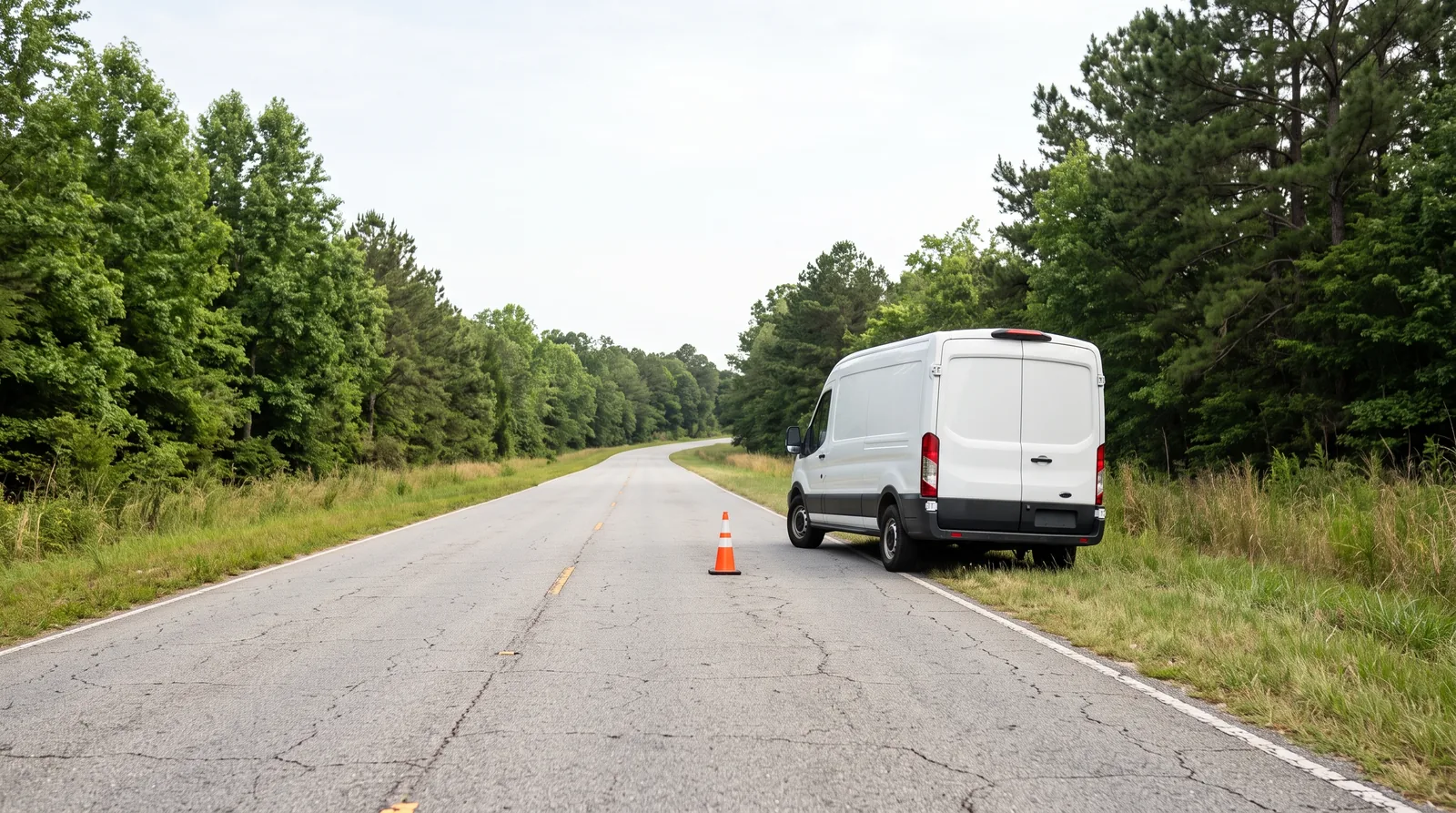
A work-vehicle crash can create a fast-moving coordination problem for a Georgia employer. Start by focusing on safety, emergency response, and a clear record of what happened. Do not ask anyone to decide fault at the scene or promise that a policy will cover a loss.
This checklist is general information, not legal or coverage advice. Your insurance professional, carrier, and legal counsel can help with the details that apply to a specific accident.
Put safety and emergency needs first
Check for injuries and call 911 when emergency help is needed. Follow directions from law enforcement and avoid moving vehicles or debris unless it is necessary for safety. If a driver can do so safely, they should exchange the information required at the scene and cooperate with responding officers.
Start a simple incident record
Ask the driver to capture the basics while they are fresh: date, time, location, vehicle identification, the names and contact details of involved parties, witnesses, responding agencies, and any report number provided. Photos of vehicle damage, the surrounding scene, road conditions, and relevant signs can help preserve context when taken safely and lawfully.
Keep the first internal report factual
A short internal report should separate observed facts from assumptions. Record what the driver saw, what was reported, and what documents or photos are available. Avoid speculating about fault, injuries, or coverage in internal messages. Preserve dash-camera footage or telematics records under the company’s normal retention practices when they may be relevant.
Notify the right contacts
Use the company’s established escalation path to notify the fleet manager or owner and the appropriate insurance contact promptly. The exact reporting process and deadlines depend on the policy and the facts of the event, so use the policy documents and carrier instructions rather than relying on a generic timeline.
If an employee was injured, treat that as a separate workplace-injury process. Zorn Insight has a Georgia workplace injury reporting guide that can help employers organize the initial handoff.
Use the incident to improve the next response
After the immediate work is complete, review whether drivers know whom to call, where the incident form is stored, and how to reach the insurance contact after hours. That is a process review—not a conclusion about fault or coverage. For an annual review of drivers and vehicles, see Zorn Insight’s commercial auto renewal checklist.
Frequently asked questions
Should a driver admit fault after a work-vehicle crash?
No. A driver should focus on safety, accurate information exchange, and cooperation with law enforcement. Fault and coverage should be evaluated through the appropriate claims and legal processes.
What information should a business collect after a crash?
Collect the time, location, vehicle details, involved-party and witness contact details, responding-agency information, report number if available, and safely obtained photos or records. Keep observed facts separate from assumptions.
When should an employer contact its insurance carrier?
Contact the appropriate insurance representative promptly using the policy and carrier instructions. Reporting requirements can depend on the policy and the circumstances, so a generic deadline may not apply.
Does a vehicle crash also require a workplace-injury report?
If an employee is injured, the employer may need to follow its separate workplace-injury process. The vehicle incident record and injury reporting should be coordinated, but they are not the same process.
Source: National Highway Traffic Safety Administration, Road Safety (accessed September 24, 2026).